Open today · 08:00 – 16:45

Tulum Cenote Tour

Tulum Cenote Tour — Reserved Entry & Guided Freshwater Swims

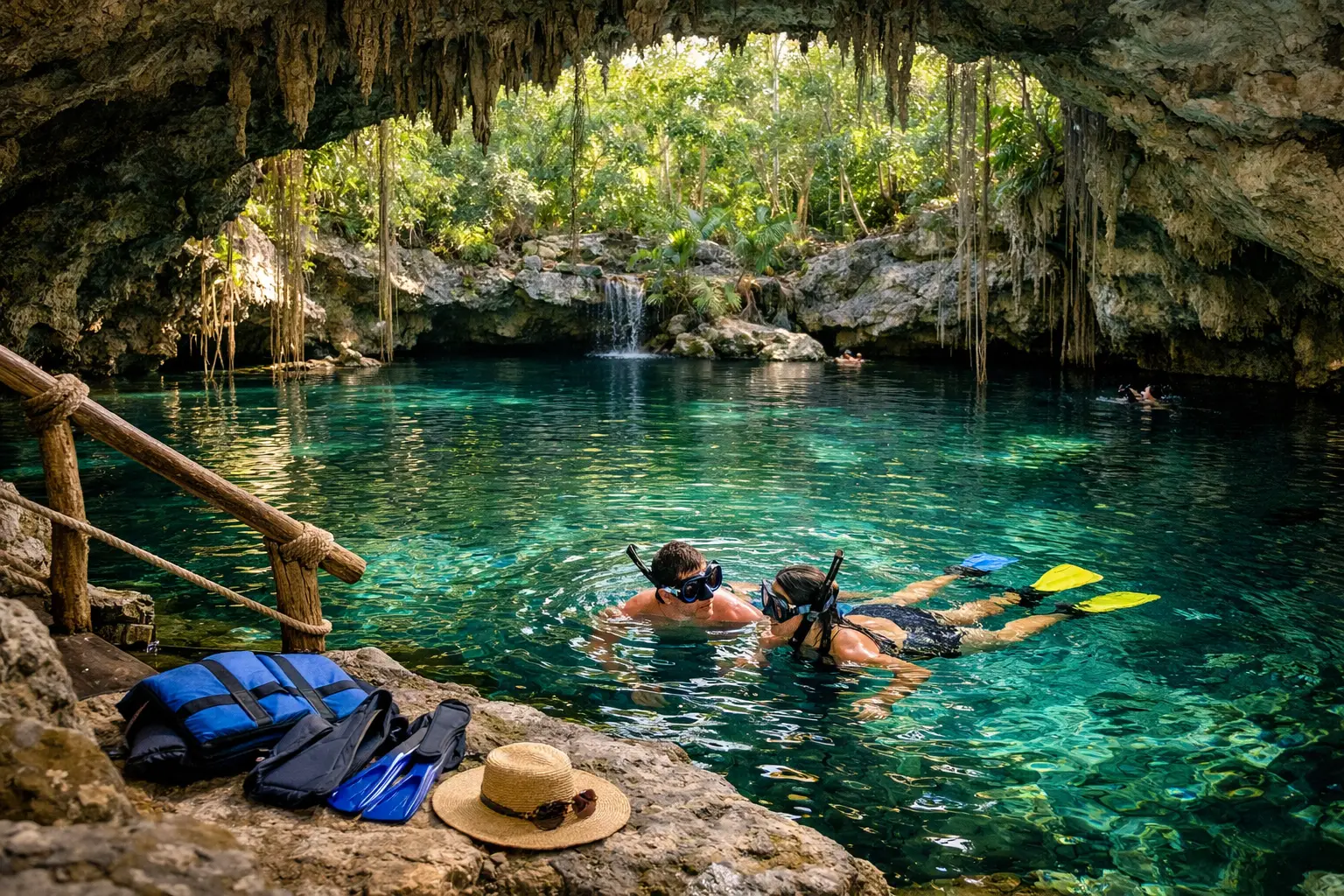
Limestone opens to water below, daylight falls through stone.

48K+ travelers chose this
Free Cancellation
Right now: Moderate — summer weekday Arrive before 10:00 to beat tour-bus groups and midday heat
4-6 hours recommended
1 Languages
Small groups, 8-12 people
Free Cancellation
Free cancellation Instant confirmation Mobile voucher Verified partner Skip-the-line
Choose your ticket

Ticket options at a glance

Compare fares, pick the fit — all bookings are mobile-voucher and eligible for free cancellation where shown.

Tulum Cenote Trail Bike Adventure 5 hr
Standard Entry

Tulum Cenote Trail Bike Adventure

4.9 (143)
€103
  • Entry ticket
  • Mobile voucher
  • Valid same day
  • Free cancellation
Book this ticket
Chichen Itza, Cenote & Valladolid Full-Day Tour from Tulum 12 hr
Guided Experience

Chichen Itza, Cenote & Valladolid Full-Day Tour from Tulum

4.7 (315)
€62
  • Expert local guide
  • Small group
  • Skip-the-line access
  • Free cancellation
Book this ticket

Is it worth it?

Worth it for snorkelers and first-time visitors

A tulum cenote tour to Gran Cenote runs 500 MXN per person, cash only, and for that you get some of the clearest freshwater on the Riviera Maya. The Gran Cenote day trip delivers visibility past 30 meters, resident turtles gliding through the shallows, and open cave swim-throughs where snorkelers can drift between stalactites without needing a dive certification. Compared to smaller roadside sinkholes charging half as much, you pay a premium — but the scenery, on-site facilities, and swim-through access justify the gap. This ranks among Tulum landmarks that reward the entry cost. It pays off for snorkelers, families wanting easy shallow entry, and anyone chasing the classic turtle-and-clear-water experience. Bargain hunters who only want a quick dip, and travelers already tired of paid sinkholes, will feel the sting. Book skip-the-line cenote tickets ahead and arrive early to beat capacity limits.

What makes it worth it

  • Visibility past 30 meters in clear freshwater
  • Resident turtles in shallow areas
  • Open cave swim-throughs, no diving needed
  • On-site facilities and easy shallow entry

Keep in mind

  • Pricier than smaller roadside cenotes
  • Cash only, 500 MXN per person
  • Fills to capacity later in day

Bottom line: For clear water, turtles, and swim-through access, the tulum cenote tour tickets earn their 500 MXN — book ahead and go early.

Head to head

Tulum Cenote Tour: Gran Cenote or Cenote Dos Ojos?

Snorkelers wanting an easy, turtle-filled swim near town should pick a Tulum cenote tour at Gran Cenote, while divers chasing a true cave system should head to Cenote Dos Ojos instead.

Top pick
Gran Cenote
Cenote Dos Ojos
Cenote type Cave system, two linked sinkholes
Distance from Tulum About 25 km (25–30 min drive)
Best for Cave diving, deeper exploration
Entrance fee Around 370–400 MXN (cash only)
Crowd levels Busy by 9:30–10am, quieter later
Facilities on site Changing rooms, lockers, showers

Verdict: Gran Cenote suits snorkelers and families who want an accessible, wildlife-rich swim close to Tulum, while Cenote Dos Ojos rewards certified and beginner divers willing to travel further for cave passages and the Bat Cave route.

Featured Experiences

Popular tours & activities

Hand-picked experiences loved by thousands of travelers

Recommended Experience

Powered by GetYourGuide

Another traveler favorite

Powered by GetYourGuide
Tulum Ruins & Twin Cenotes Half-Day Tour from Riviera Maya 8 – 8.5 hours Free Cancellation

Tulum Ruins & Twin Cenotes Half-Day Tour from Riviera Maya

Ancient Mayan cliffs, crystal cenotes, and jungle swims — all before lunch from your hotel.

4.4 (1122)
FromFrom €36.88
See details
Tulum, Cenote & Akumal Sea Turtle Tour from Cancun 10 hours Free Cancellation

Tulum, Cenote & Akumal Sea Turtle Tour from Cancun

Ancient ruins, a butterfly cenote, and swimming with sea turtles — all in one epic day from Cancun.

4.6 (327)
FromFrom €89.57
See details
Tulum Ruins, Mayan Village & Cenote Half-Day Small Group Tour 6 hours Free Cancellation

Tulum Ruins, Mayan Village & Cenote Half-Day Small Group Tour

Discover ancient ruins, a living Mayan community, and a crystal-clear cenote in one unforgettable half-day.

4.5 (49)
FromFrom €95.29
See details
Your journey

Step-by-step — what your day looks like

1

Arrive and pay entrance

Pay the 500 MXN cash fee at the gate and pick up a locker key

What you'll see

Highlights not to miss

Main Sinkhole Platform

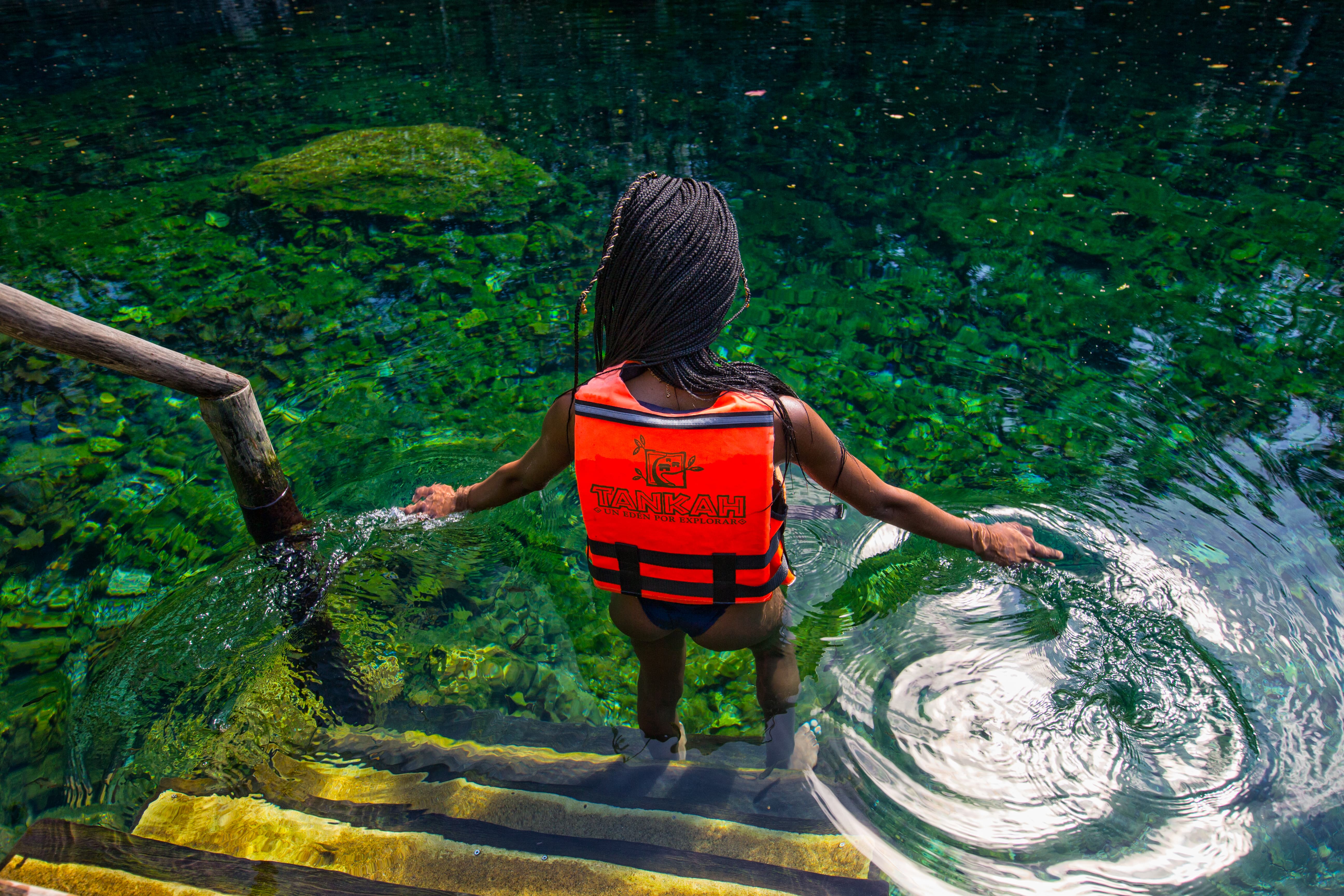
The larger of the two connected sinkholes, roughly 140 square meters and partly open to the sky, is where most visitors enter the water via a wooden staircase. Sunlight filtering through the opening illuminates the turquoise water down to about 10 meters.

Turtle Conservation Area

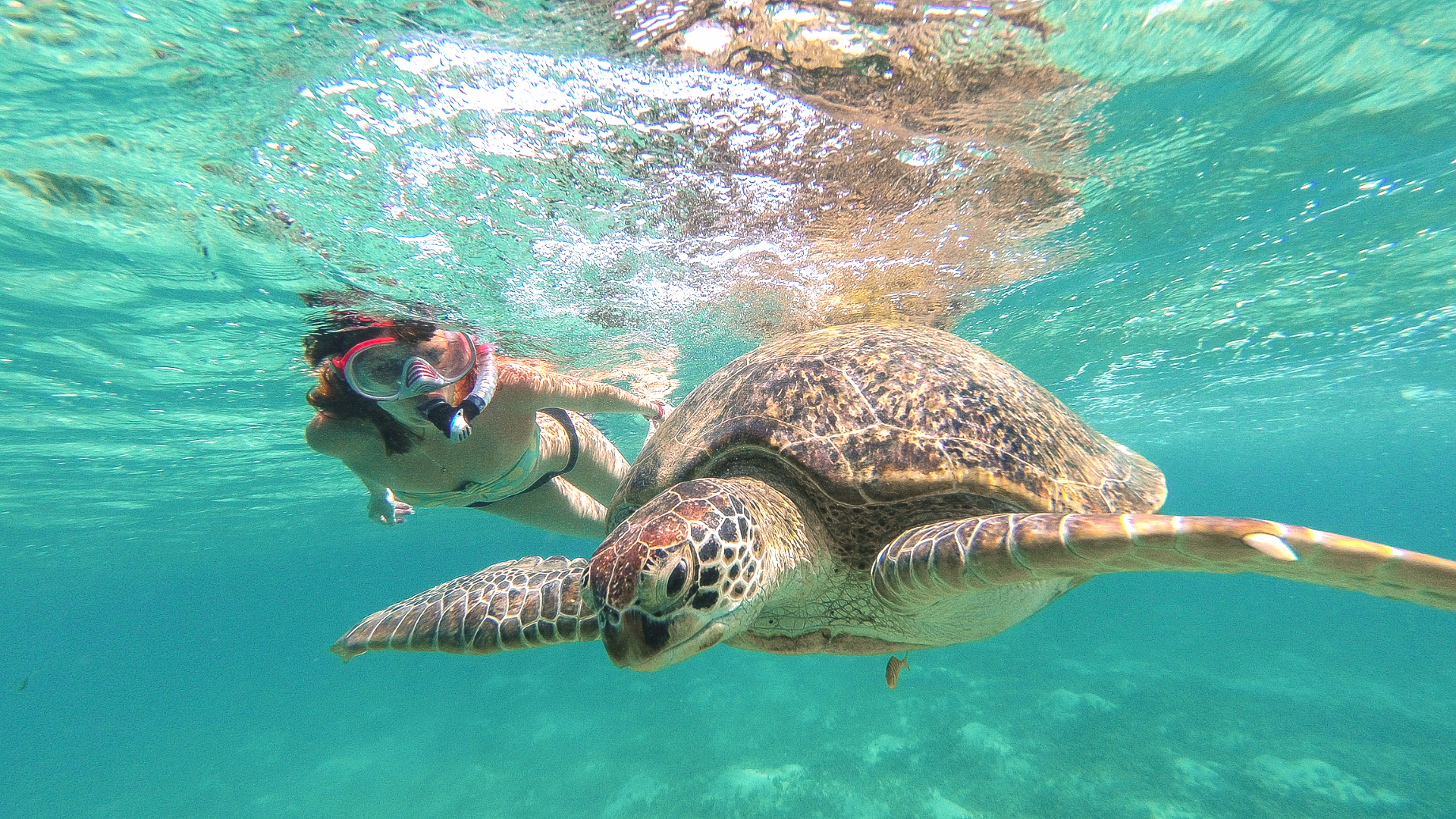
A roped-off section protects resident freshwater turtles that surface regularly near the shallows. Snorkelers commonly spot several turtles per visit alongside small fish species.

Bat Cave Cavern Passage

A dark, partly submerged tunnel connects the two sinkholes and houses a colony of bats roosting near the ceiling. Snorkelers pass beneath stalactites formed over thousands of years as the cave slowly filled with water.

Stalactite Cavern Section

A partially submerged chamber displays dense clusters of stalactites and stalagmites formed when the cave system was still dry, tens of thousands of years ago. The formations sit just above and below the waterline, visible to snorkelers with a mask.

Second Sinkhole Entrance

A smaller, quieter second sinkhole connects underground to the main pool and typically draws fewer visitors. Its narrower opening creates a more enclosed, shaded swimming area.

Garden Picnic Area

A grassy clearing shaded by palms sits beside the parking lot and serves as the rest area for drying off between swims. Visitors are permitted to bring their own biodegradable food here after passing the entrance check.

The experience

What the visit is really like

You arrive at Quintana Roo 109 in the cool of morning and follow the path in from the entrance, the jungle noise thinning as the ground opens ahead of you. You pay the 500 MXN entry in cash, rinse at the showers — a rule that keeps sunscreen out of the water — and step down toward the first pool. The stone is smooth underfoot from decades of the same descent. You lower yourself into water that reads almost turquoise where the light hits it. The cold catches you first, then the clarity: you can see your own shadow tracking across the limestone floor metres below. Fish drift past your legs. You swim toward the cavern mouth, where the ceiling closes overhead and stalactites hang low enough to touch, and the sound of your own breathing sharpens in the enclosed dark. You climb out onto a ledge, dry in the filtered light, and watch a shaft of sun cut the surface into pale ribbons. A guide points out where the freshwater layer meets the salt below, a blur you can wave your hand through. On a guided tulum cenote tour you move between two or three of these chambers, each one a different balance of light, stone, and silence. You leave with your skin cool and your ears still full of dripping water.

Everything You Need to Know

Your complete experience guide

All the details about your upcoming adventure in one place

Your Tulum Cenote Tour Explained

A tulum cenote tour guides you through the limestone sinkholes and freshwater pools that thread beneath the Yucatan jungle, with a certified guide handling logistics so you can focus on swimming and snorkeling in crystalline water. These cenote diving experiences reach both open-air and cavern-style formations fed by the region's vast underground river system. Booking tulum cenote tour tickets in advance secures your spot, since the most photogenic freshwater sinkholes fill quickly during summer.

The Yucatán Peninsula holds no rivers on its surface — the entire limestone shelf drains underground, feeding an estimated ten thousand cenotes across the region. These water-filled sinkholes form where porous bedrock collapses and exposes the aquifer beneath, and a Tulum cenote tour moves through exactly these openings: pools ringed by stone, some fully open to the sky, others sealed inside caverns hung with stalactites that took millennia to grow. The name comes from the Yucatec Maya word ts'onot, meaning a well or abyss. Long before the word became a booking term, these were the only reliable freshwater sources on a peninsula with no lakes, and they anchored settlement patterns across the lowlands. Their significance today is as much hydrological as historical. The interconnected caverns around Tulum belong to some of the longest surveyed underwater cave systems on Earth, and the water itself is startlingly clear — filtered through rock, it carries visibility that divers measure in tens of metres. What gives the recorrido de cenotes tulum its particular character is the range packed into a small area of Quintana Roo. Within a short radius sit open cenotes, where sunlight strikes turquoise water and roots of fig trees trail down the walls, and cavern cenotes, where the temperature drops and the acoustics change and a swimmer floats between light and complete dark. The rock records the process plainly: flowstone, curtain formations, and the sharp mineral edges of fossilised coral from when this shelf lay beneath a warm sea. The water sits at a near-constant temperature year-round, around 24 to 25 degrees Celsius, cool against the coastal heat above. A halocline forms in many caverns where freshwater meets denser saltwater intruding from the coast, producing a blurred, shimmering boundary that swimmers can pass their hands through. This is the geology that makes a tulum cenote tour distinct from any coastal swim — the setting is subterranean, ancient, and structurally alive in a way the open Caribbean is not. Conservation shapes the experience more each year. The aquifer that fills these pools is the same one supplying drinking water to the region, so access is capped and monitored, and the surrounding jungle corridors are protected habitat for coatis, motmots, and orchids. A tulum cenote tour, at its best, reads as a passage through the peninsula's plumbing and its deep past at once — stone, root, and water arranged into rooms that predate every ruin along the coast. These are among the defining natural tulum landmarks, and they remain, above all, working parts of a living hydrological system.
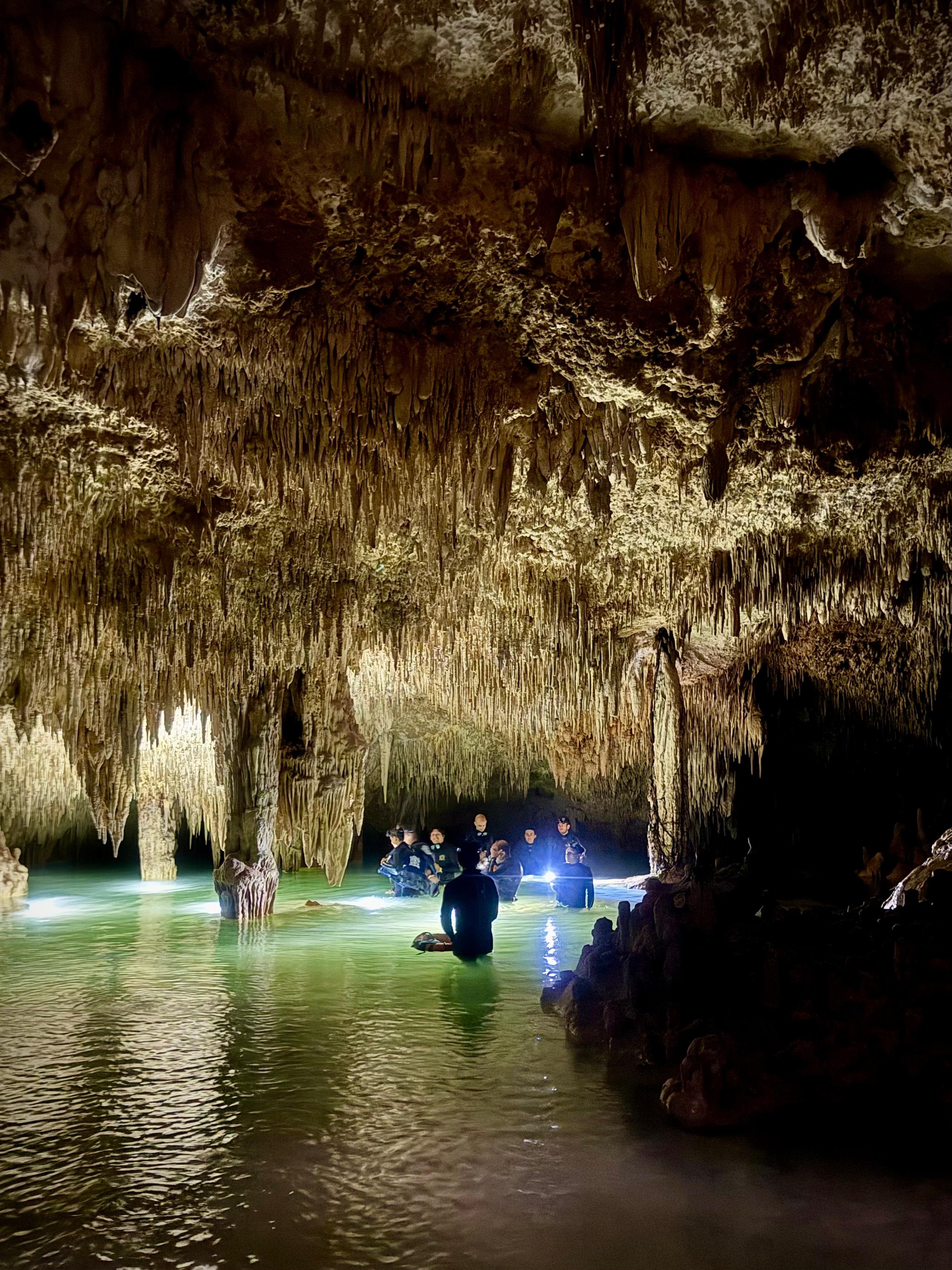
The entire limestone shelf drains underground, feeding an estimated ten thousand cenotes across the region.

Dress code

Swimwear is standard for anyone entering the water, and a light cover-up or rash guard helps with sun exposure on the walk between the parking area and the cenote platforms. Footwear with grip is useful on the wooden staircases and slick limestone edges around the swimming areas.

Bags & security

There is no metal-detector or bag-scan checkpoint, but staff visually inspect coolers and large bags at the entrance gate to confirm no glass containers or single-use plastics are being brought in. Lockers near the changing rooms are the safest place to leave valuables while swimming, since the open-air deck areas are not staffed.

Photography

Personal cameras, phones, and GoPros are permitted throughout the cenote and its cavern sections, including underwater housings for snorkelers. Tripods, drones, and any commercial or professional shoot require prior written permission from site management, and flash photography is discouraged near the resident freshwater turtles.

Families & strollers

Life vests are required for children and available to rent at the gear hut near the entrance. A shallow wading section near the main staircase suits younger swimmers and beginners.

Accessibility

The site has no wheelchair ramps or paved accessible pathways; entry to the water is via wooden staircases with handrails, and the ground between the parking area and cenote is uneven limestone and packed dirt. Visitors with mobility limitations should plan for uneven terrain and stairs, and staff can advise on the shortest route to the main platform on arrival.

Food & drink

Only biodegradable snacks and drinks in reusable containers may be brought in; glass, alcohol, and single-use plastics are not permitted anywhere on-site. A small snack stand near the entrance sells coffee, chips, and bottled water, and a grassy picnic area is set aside for visitors who bring their own food.

Not allowed

× sunscreen (non-biodegradable) × insect repellent (DEET-based) × glass bottles × single-use plastic bags × styrofoam containers × alcohol × drones without permit × tripods without permit × speakers/loud music × fishing equipment × pets × cigarettes near the water × large coolers

What to bring

✓ Cash in pesos ✓ swimwear ✓ biodegradable sunscreen ✓ reef-safe insect repellent ✓ water shoes ✓ towel ✓ change of clothes ✓ small waterproof phone case

Opening hours

Mon 08:00 – 16:45

Quiet before 09:00

Tue 08:00 – 16:45
Wed 08:00 – 16:45

Mid-week lull

Thu 08:00 – 16:45
Fri 08:00 – 16:45

Weekend crowds building

Sat 08:00 – 16:45

Busiest day, tour buses

Sun 08:00 – 16:45

At a glance

Hours today

08:00 – 16:45 (last entry 16:15);location

Getting there

Car · 10 min · Free on-site parking

Drive northwest from downtown Tulum on Highway 109 toward Cobá; a signed parking lot sits on the right after about 5 kilometers.

Taxi · 10–15 min · 200–300 MXN one-way

Taxis from Tulum Pueblo run along the same Highway 109 route and drop off directly at the entrance gate.

Bike · 25–30 min · Bike rental 100–150 MXN/day

Rent a bicycle in town and follow the bike lane alongside Highway 109 toward Cobá.

Public transport · 15–20 min · 30–40 MXN

Colectivo vans heading toward Cobá depart from Tulum Pueblo and can drop passengers near the entrance on request.

Cancellation policy

Entrance is walk-up only and the 500 MXN per-person fee is paid in cash at the gate, so there is no advance reservation to cancel or refund. Pre-booked cenote transportation or guide add-ons typically allow free cancellation up to 24 hours before pickup, but the entrance fee itself is non-refundable once paid.

Plan your time

How long do you need?

Recommended time

1-2 hours

A tulum cenote tour typically runs 1 to 2 hours, enough time for a swim, a snorkel loop, and photos before platforms fill up. Arriving in the 08:00–10:00 window matters because crowds build steadily from mid-morning as tour buses and day groups arrive, and the site's capacity limits mean later arrivals sometimes wait to enter rather than swim. Add 30 minutes if you're renting gear or want extra time in the cave sections; subtract time if you're only stopping for a quick look. By early afternoon, queues at the entrance are the norm rather than the exception, so treat the first two hours after opening as the real window for a relaxed visit.

Crowd levels through the day

Early morning (8:00-9:00) Light
Mid-morning (9:00-10:00) Building
Late morning (10:00-12:00) Busy
Midday (12:00-14:00) Peak
Afternoon (14:00-16:00) Busy
Last entry window (16:00-16:45) Moderate
Plan ahead

When to go — year at a glance

Weather · crowds · average price — dots go green to amber to red as each metric rises.

Winter (Nov–Feb)

Dry season with lower humidity and pleasant daytime temperatures around 26–28°C. Crowds are moderate outside the Christmas–New Year peak. Water visibility tends to be at its best during these months.

Spring (Mar–May)

Warmer and drier, with temperatures climbing toward 30–33°C by May. Spring break weeks in March see heavier crowds, especially on weekends.

Summer (Jun–Aug)

Hot and humid with frequent afternoon showers; daytime highs often reach 33–35°C. Mornings before 10:00 stay clearer and cooler before storm clouds build.

Fall (Sep–Oct)

Hurricane season brings the highest rainfall and occasional tropical storm closures, but crowds are the lightest of the year and rates on nearby stays are lower.

Insider tips

Helpful tips for your visit

Bring exact change

Only cash pesos are accepted at the gate, and staff don't always have change for large bills, so bring smaller denominations.;Skip the rental line

Where to meet

Meeting points

Gran Cenote main entrance gate

Quintana Roo 109, 77796 Tulum, Q.R., Mexico

Parking lot and ticket booth on the right side of the highway

Get directions
The story

The history behind the site

Gran Cenote began as geology. Rain and groundwater dissolved the porous Yucatán limestone over millennia. The cavern roof thinned, then collapsed, exposing the freshwater table below. What remained was a sunken pool ringed by stalactites — the classic sinkhole the Maya would later revere. To the ancient Maya, such openings were dzonot, portals to Xibalba, the watery underworld ruled by death gods. Cenotes supplied drinking water across a peninsula with no surface rivers, so settlements clustered around them. They also held ritual weight. Offerings and human remains recovered from cenotes across Quintana Roo confirm their sacred function. The nearby walled city of Tulum, occupied through the 13th to 15th centuries, depended on this same aquifer, and any tulum cenote tour today traces routes the Maya walked for water and worship. The Spanish arrival in the 16th century broke the ceremonial order, though the cenotes kept feeding local communities. For centuries Gran Cenote sat quiet, known mainly to ranchers and cave divers. That changed with the tourism boom along the Riviera Maya after Cancún's development from the 1970s onward. Divers mapped the flooded passages of the Sac Actun system, one of the longest underwater cave networks on Earth, and word spread. By the 2000s the site was formalized, gated, and ticketed. Controversy followed the money. Development pressure, wastewater seepage, and sunscreen chemicals threatened the aquifer's clarity, prompting rules that any Tulum landmarks visitor now encounters. Conservation groups pushed back against overuse. The result is a managed site where skip-the-line access and structured tulum cenote tours coexist with fragile karst hydrology. As of 2026, Gran Cenote remains open daily, its turtles and freshwater fish drawing steady crowds. A well-run Tulum cenote tour still frames the pool as the Maya saw it — a threshold between worlds. Booking tulum cenote tour tickets funds the upkeep that keeps this collapsed cavern legible, and each guided tulum cenote tour tour carries that longer history forward.

Prehistory

Limestone dissolved and the cavern roof collapsed, opening the freshwater sinkhole.

Classic era

Maya revered cenotes as dzonot, sacred portals to the underworld Xibalba.

13th–15th c.

The walled city of Tulum drew on the same coastal aquifer for water and ritual.

16th c.

Spanish conquest ended Maya ceremonial use, though cenotes kept supplying communities.

1970s

Cancún's development launched the Riviera Maya tourism boom nearby.

2000s

The site was gated and ticketed as cave divers mapped the Sac Actun system.

2026

Gran Cenote operates under conservation rules protecting the fragile karst aquifer.

Photo spots

Best photo spots

Wooden Entrance Staircase

Best light · Before 09:00

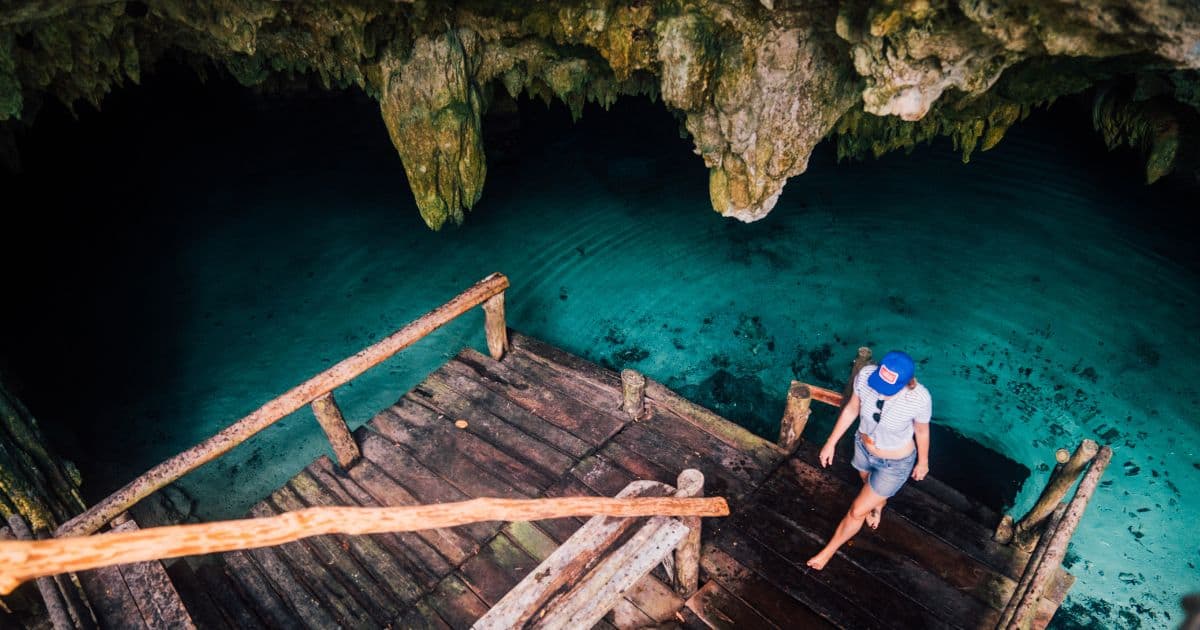
The wooden boardwalk staircase leading down into Gran Cenote is the most photographed frame on any tulum cenote tour, with turquoise water and limestone walls behind you as you descend. Stand partway down the steps facing outward for the classic shot. Arrivals before 09:00 avoid the line of people waiting to pose here.

Main Turtle Lagoon

Best light · Golden hour, early morning light

The open lagoon near the first staircase is where freshwater turtles surface among moss-covered rocks and overhanging jungle vegetation. Shoot from the edge of the wooden platform or while treading water with a waterproof housing for reflections on the surface. Snorkelers often glide through frame, so patience helps for a clean composition.

Bat Cave Passage

Best light · Midday for filtered light

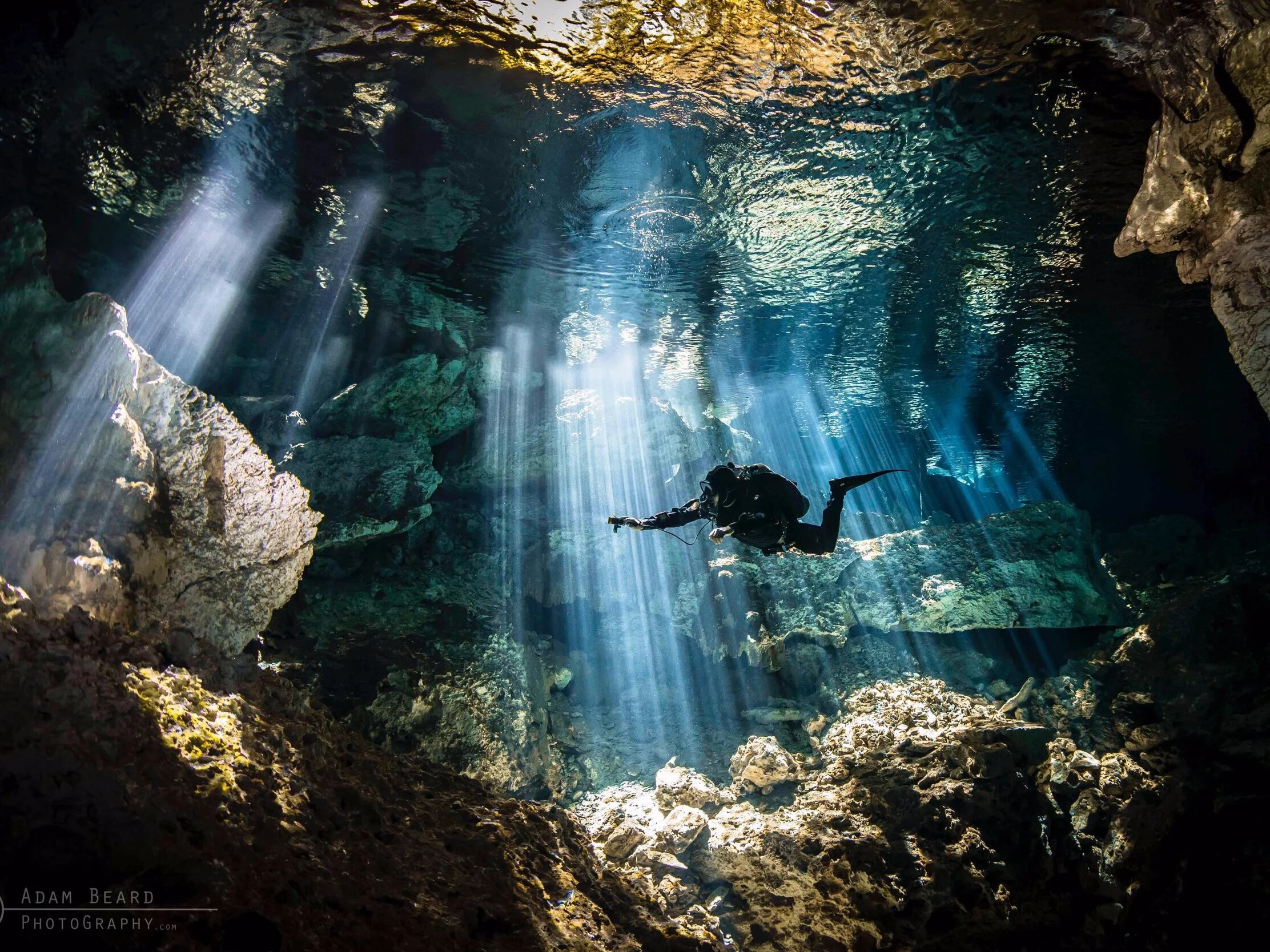
A semi-dark limestone corridor connects the two main sinkholes, its ceiling hung with stalactites and home to resident bats and swallows. Photos here need a waterproof camera and a steady hand, since you swim through the channel rather than stand. Low natural light filtering from each end creates a strong silhouette effect.

Second Staircase Cove

Best light · Before 10:00

A quieter, smaller staircase entrance sits apart from the main one and drops into a secondary pool with fewer visitors. It's a good angle for uncluttered water shots and close-up turtle encounters. Fewer people pass through here than at the main entrance.

Cave Entrance Overlook

Best light · Early morning

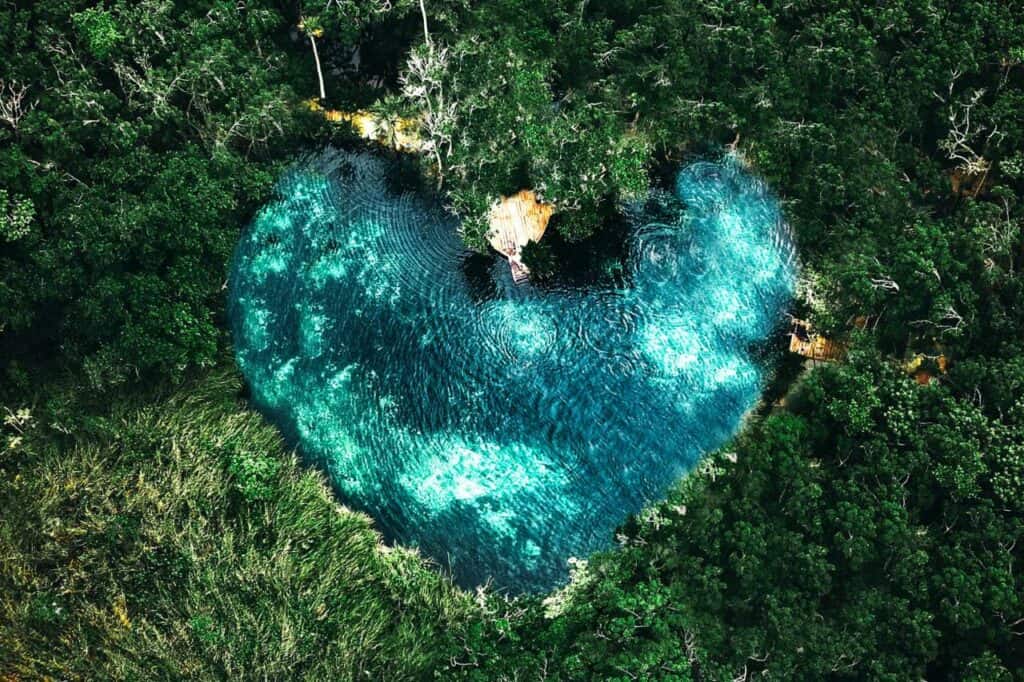
From the grassy deck above the water, the C-shaped sinkhole and cave mouth are visible together, showing scale against the jungle canopy. This vantage suits wide shots of the whole cenote rather than close detail. Morning haze often softens the light nicely.

Gallery

Moments from the experience

With kids

Visiting with kids

A tulum cenote tour at Gran Cenote works well for families because the site splits naturally into a calm, shallow entry area and a deeper cavern zone, so parents can match the water to each child's comfort level. It suits toddlers wading at the platforms just as easily as older kids snorkeling toward the small cave openings.

Strollers

The wooden walkways handle a stroller down to the entry platforms, but the steps into the water itself mean you'll switch to a baby carrier once you're near the cenote edge. Pack a lightweight umbrella stroller rather than a full-size one for the parking-lot-to-entrance stretch.

Best ages

Toddlers and young children do best in the open, shallow section near the entry steps, where visibility is clear and adults can stand nearby. Kids around 6 and up who are comfortable swimming can handle the guided-rope cavern area with a life jacket on, making this a genuine skip-the-line cenote outing for mixed-age families.

Facilities

On-site changing rooms, flush toilets, freshwater showers, and lockers make gear changes and clean-ups straightforward for young kids. There's no dedicated baby-change table reported, so bring a portable mat for diaper changes.

Pacing

Arrive within the 08:00-10:00 window so your children get calm water and open platform space before tour buses fill the shallow zone. Plan on 60-90 minutes total, since young kids tire quickly moving between the sunny walkways and cooler water.

Rainy-day plan

Gran Cenote is partly open-air, so light rain doesn't stop a visit, but a downpour makes the wooden walkways and stone steps slippery for little feet. If storms roll in, wait it out under the entrance palapa rather than pushing on with toddlers underfoot.

Food & drink

Where to eat nearby

There is no restaurant at the entrance, but a small snack stand and shaded picnic tables sit right by the parking area for anyone who booked a tulum cenote tour and wants a quick bite after swimming. For a proper meal, the Coba road leads straight back into Tulum town, a few minutes' drive away.

Cenote snack stand

$

Snack stand on-site

Sells chips, fruit, soda, and simple sandwiches near the ticket booth. Handy for a post-swim snack rather than a full meal, and lines form fast once tour buses unload mid-morning.

Picnic tables (on-site)

Free with entry

Bring-your-own picnic area

Shaded tables and hammocks near the parking lot where visitors unpack their own food. Good for families pacing a full morning around the tulum cenote tour tour without leaving the grounds.

Antojitos La Chiapaneca

$

Taqueria — short drive toward town

Casual spot in Tulum Centro known for tacos al pastor, panuchos, and salbutes. Best for a sit-down lunch after cleaning up from the cenote; gets busy around midday.

Chedraui supermarket

$

Grocery store — short drive toward town

Stocked bakery, deli, and produce section useful for grabbing supplies before or snacks after any tulum cenote tour tickets are used. Quick, practical, and less about atmosphere than a full meal.

Customer Reviews

What travelers say

Real experiences from real travelers

4.5
Based on undefined reviews
1 ★ 410
2 ★ 280
3 ★ 640
4 ★ 2100
5 ★ 9200
M
Marcus R.
United States · 2026-06-18

Cool water, quiet morning

We booked an early tulum cenote tour and had the first pool almost to ourselves before nine. The water was colder than expected and glass-clear, with little black catfish darting near the roots. Our guide pointed out where the ceiling had collapsed centuries ago, which made the whole cavern feel enormous.

L
Lena K.
Germany · 2026-05-02

Three cenotes in one day

The private cenote excursion took us to one open pool, one cavern, and one half-lit grotto, each completely different in color and temperature. Bring water shoes because the limestone steps get slippery after a lot of feet pass through. Floating under a shaft of light in the second cenote was the part I keep thinking about.

D
Diego M.
Mexico · 2026-07-08

Refreshing escape from the heat

In July the jungle is humid and heavy, so dropping into that cool groundwater felt like relief you can barely describe. The guided cenote swim was well paced and never crowded because we arrived before the tour buses. I appreciated that biodegradable sunscreen was explained clearly before we got in.

S
Sophie L.
France · 2026-03-21

Beautiful but arrive early

By late morning the main cenote filled with people and the light through the opening lost some of its drama. Still, the Tulum cenote adventure was smooth and the transport was comfortable in a small air-conditioned van. Our guide knew the freshwater cave system well and answered every question.

A
Akira T.
Japan · 2026-04-14

Sunbeam through the ceiling

Around eleven the sun lined up perfectly with a hole in the cavern roof and lit the water electric blue. The tulum cenote tour tickets included snorkel gear that actually fit, which surprised me after other trips. Swimming among stalactites in near silence is something I would repeat.

C
Camila S.
Brazil · 2026-06-30

Great small group

There were only six of us, so the whole skip-the-line cenote experience felt personal rather than rushed. The water visibility went down maybe forty feet and you could see fish hanging in the deeper blue. Our guide grew up nearby and shared how the local community protects these pools.

T
Tom H.
United Kingdom · 2025-11-09

Muddy path, worth it

After rain the trail between the sinkholes was slick, so decent footwear matters more than people mention. Once in, the tulum cenote tour tours run by our operator delivered exactly the quiet turquoise water we hoped for. The cavern section stayed cool even at midday and the roots hanging from the ceiling looked prehistoric.

I
Isabella G.
Spain · 2026-02-16

Loved the cavern light

We chose an afternoon Tulum landmarks and cenote combo and the caverns were the highlight by far. Standing waist-deep in that clear groundwater with limestone arching overhead felt like stepping into another world. The guide handed out life vests and gave a calm safety briefing before anyone entered.

N
Nathan P.
Canada · 2026-01-30

Clear water, good guide

Late January meant fewer crowds and the water was cold enough to wake you right up. This tulum cenote tour tour covered two very different pools and the driver waited patiently while we lingered. Seeing sunlight scatter across the surface into the deep blue below stayed with me the whole trip.

P
Priya N.
Australia · 2026-05-27

Snorkeling the freshwater cave

The visibility inside the freshwater cave was remarkable, with formations dropping from the ceiling toward the surface. Our guided cenote swim gave plenty of time to float and just look up at the light. Go on a weekday morning and you may share the pool with only a handful of people.

FAQ

Frequently asked questions

Everything you need to know for your journey

Around the corner

Nearby landmarks worth a detour

Tulum Archaeological Site

10 min drive

landmark

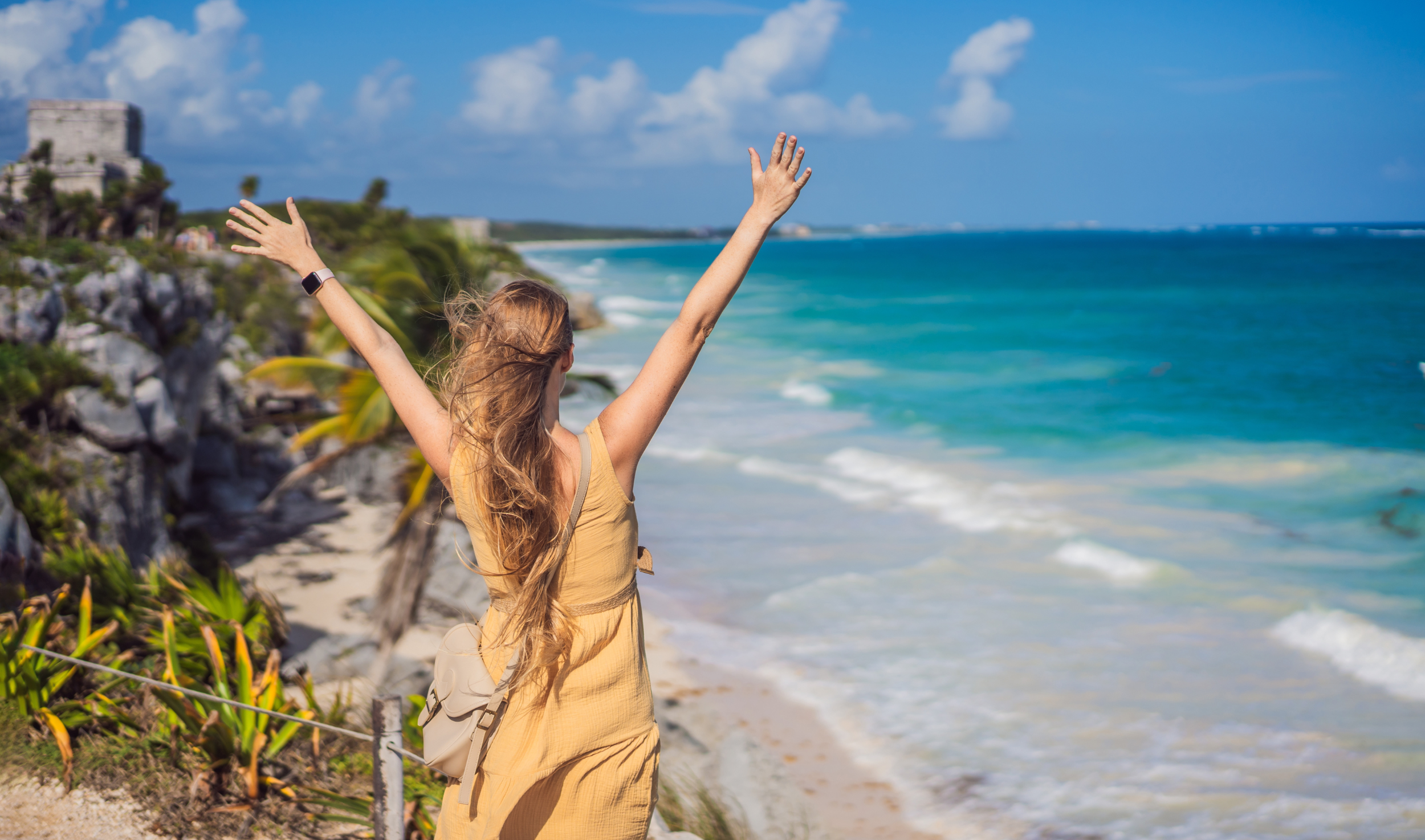
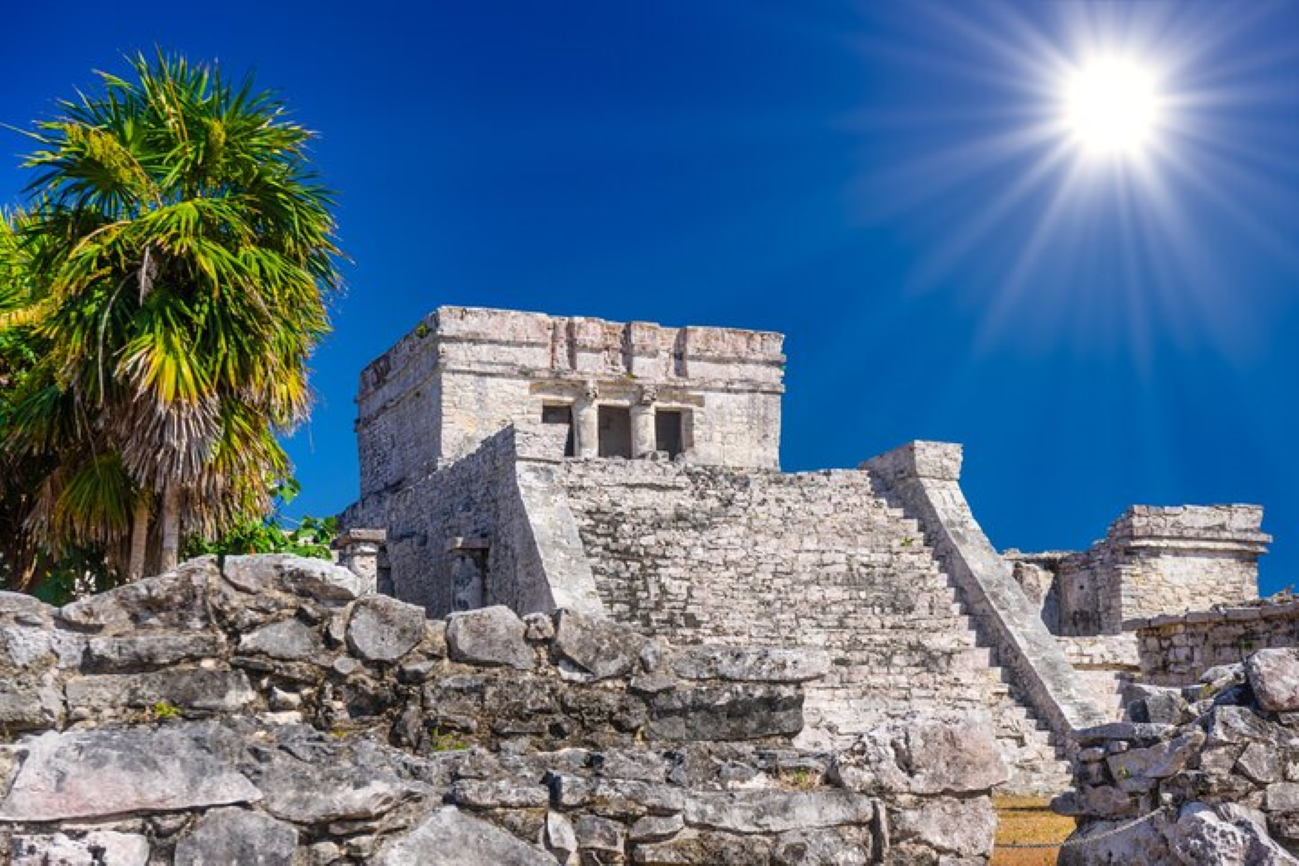
Clifftop Maya ruins overlooking the Caribbean Sea, including the Castillo watchtower. Separate entrance fee applies and it gets busy by mid-morning.

Where to stay

Where to stay nearby

Tulum Pueblo

10 min drive

district

Town-center lodging with easy access to restaurants and highway 109 toward the cenote.

Ready for Adventure?

Join thousands of happy travelers who have discovered this incredible experience

Book Your Experience Now